MEDVi and the one-person AI company: what is reported and what founders can learn
The MEDVi story, told from sources: how a one-person AI company reportedly reached $401M in sales, which parts partners ran, and the FDA letter and lawsuits.
MEDVi is a widely cited example of a one-person AI company: a telehealth business that founder Matthew Gallagher reportedly launched from his Los Angeles home in September 2024 with $20,000 and more than a dozen AI tools, and that reportedly recorded $401 million in sales in 2025 with two people on the payroll. The same reporting describes how it was set up: licensed partners ran the regulated parts, while MEDVi kept the brand, the website, the ads and the checkout. It also shows the costs. Before the best-known profile ran, the FDA had already sent the company a warning letter, and lawsuits and press investigations followed.
This post sets out what has been reported, by whom, and what is still unverified. We build website templates, not health businesses, so the lessons at the end are about structure and marketing, not medicine. Nothing here is medical advice or a claim about any treatment.
A note on sources: every figure below is self-reported by the company or reported by the press. None of it comes from audited accounts, and we say "reported" throughout for that reason.
What MEDVi is
MEDVi is an online telehealth brand. Its own pages describe a short online intake, after which an independent licensed provider decides whether to prescribe, and medication is shipped from a pharmacy (MEDVi home page, MEDVi terms and conditions). The site says compounded medications are dispensed by state-licensed pharmacies and are not FDA approved, and names OpenLoop Health clinicians as the ones who decide whether a patient qualifies (MEDVi terms and conditions).
The main product line is prescription weight-loss care built around GLP-1 medications. The FDA's warning letter records that the website offered compounded semaglutide and tirzepatide (FDA warning letter 721455). Compounded drugs are not FDA approved, which means the agency does not review their safety, effectiveness or quality before they are sold (FDA press announcement, March 2026).
Who founded it and when
The founder is Matthew Gallagher. Forbes reported that he launched MEDVi from his Los Angeles home in September 2024 with $20,000 (Forbes). His only hire was reportedly his younger brother, Elliot (Journal-News).
It was not his first company. In 2016 he started Watch Gang, a watch subscription service, which he discussed in a Mixergy interview. VnExpress reported that Watch Gang grew to 60 employees but never turned a profit, and that the experience shaped his decision to keep MEDVi's team tiny.
The story went wide in early April 2026, when The New York Times profiled Gallagher and MEDVi as a working example of a one-person, AI-run company (Drug Discovery & Development).
The reported numbers
These are the figures that circulated, and where they came from:
| Figure | Reported value | Source |
|---|---|---|
| Starting capital | $20,000 | Forbes |
| Launch | September 2024 | Forbes |
| Customers in month one | About 300 | Journal-News |
| Customers by the time of the profile | More than 250,000 | Journal-News |
| 2025 sales | $401 million | Journal-News |
| 2025 net margin | 16.2% | Journal-News |
| 2026 sales | On track for $1.8 billion (a projection) | Forbes |
| Employees | Two: Gallagher and his brother | Forbes |
Sources for the table: Forbes and Journal-News.
Two things to keep in mind. First, $1.8 billion is projected sales for 2026, not a valuation and not money already earned. Second, MEDVi is private and does not publish accounts. Critics pointed out that the figures were shown to journalists by the company and have not been independently audited (Techdirt, Gary Marcus).
How AI was reportedly used
The reporting describes AI across nearly every function Gallagher kept in-house:
- Code and website: he reportedly used ChatGPT, Claude and Grok to write the code behind the platform and to build the website (Forbes, Journal-News).
- Copy: AI reportedly produced the website copy (Journal-News).
- Ad creative: Midjourney and Runway reportedly generated images and video for ads (Forbes).
- Customer service: he reportedly tested AI voice tools from ElevenLabs and others to talk to customers (Journal-News).
- Operations: he reportedly added custom tools and bots that carry out tasks on their own (Journal-News).
What AI did not do is just as important. It did not prescribe, compound or ship anything.
The structure: who did what
Forbes described a clean split. Two platforms, CareValidate and OpenLoop Health, provide the licensed physicians, prescription processing, pharmacy fulfilment, shipping and regulatory compliance. MEDVi owns the customer relationship: brand, website, paid media, checkout and customer service (Forbes).
That split is common in the category. STAT explained that in more than 30 states corporations may not practise medicine, so consumer telehealth brands work with separate, independent medical groups whose clinicians do the prescribing. STAT named MEDVi among the warned brands and OpenLoop among four national medical groups linked to many of them.
So the "one-person company" is better described as one-person brand and marketing, on top of other companies' clinicians, pharmacies and logistics. That is the real lesson, and it is a useful one.
On the website, that split has to be explained, not hidden. A visitor should be able to see who the clinicians are, how they are licensed and that they are independent of the brand. Give that its own page: names, licences and the medical group each clinician works with.
The open questions and risks
The FDA warning letter
On 20 February 2026, about six weeks before the New York Times profile, the FDA sent MEDVi a warning letter (FDA warning letter 721455). It said:
- Product images on the site showed "MEDVi" on the label, suggesting MEDVi made the compounded drugs when it does not.
- Claims such as "Same active ingredient as Wegovy® and Ozempic®" and "Same active ingredient as Mounjaro® and Zepbound®" implied the compounded products were FDA approved or evaluated for safety and effectiveness, when they were not.
- On that basis the FDA called the products misbranded under the Federal Food, Drug, and Cosmetic Act, and warned that failing to correct the violations could lead to seizure or injunction.
MEDVi was not singled out. In March 2026 the FDA announced warning letters to 30 telehealth companies over the same two patterns: implying sameness with approved drugs and branding compounded products with the telehealth firm's name (FDA press announcement). In February 2026 the agency had also said it intended to restrict GLP-1 ingredients used in mass-marketed compounded drugs (FDA). The FDA keeps a page on what telehealth companies need to know when promoting compounded drugs.
Advertising practices
After the profile, Business Insider investigated Meta ads for MEDVi and reported that many featured doctor profiles that did not appear to exist, many tied to affiliate marketers (Business Insider via AOL). The outlet reported that the number of active MEDVi-related ads fell from more than 5,000 to roughly 2,800 after it raised the profiles with Gallagher. Gallagher told Business Insider: "In line with the FTC, we have a clear policy of providing disclosure on any actor or AI portrayal of a doctor or not using them at all. If we find an affiliate doing this we work to take these ads down."
Futurism also criticised the company's before-and-after pictures, and later reported on MEDVi's response to the allegations.
Lawsuits
Reported legal actions include:
- A class action under California's anti-spam law, which alleges that MEDVi's affiliate marketers sent deceptive email with falsified headers and spoofed domains. The New York Times added it to its story in an update (Futurism, lawyer Rob Freund on X).
- A data privacy class action, filed in April 2026, which alleges that the site said user information was "never shared" and "protected by HIPAA" while passing identifying information to third parties (Rob Freund on X).
These are allegations in complaints, not findings. We have not seen court rulings on them.
The press coverage itself
The New York Times later added an editor's note: "After this article was published, many readers noted that Medvi was facing legal and regulatory actions for its business practices. Our piece should have included that information to give readers a fuller picture of the scrutiny that the company was facing." (Futurism). A follow-up syndicated on Yahoo Finance summed up the turn: a company hailed as the future, then facing a growing list of allegations.
What founders can learn from MEDVi
Take the structure, not the shortcuts. Five lessons hold up even after the criticism.
1. Own the customer layer, partner for the regulated layer
The useful part of the model is the split. MEDVi did not try to become a medical group or a pharmacy; it rented those and focused on the brand, site and funnel (Forbes). That pattern works in other regulated fields too: payments, insurance, lending. But renting the regulated layer does not rent you out of responsibility for your marketing. The FDA letter went to MEDVi, not to its partners.
2. Position on one job and one buyer
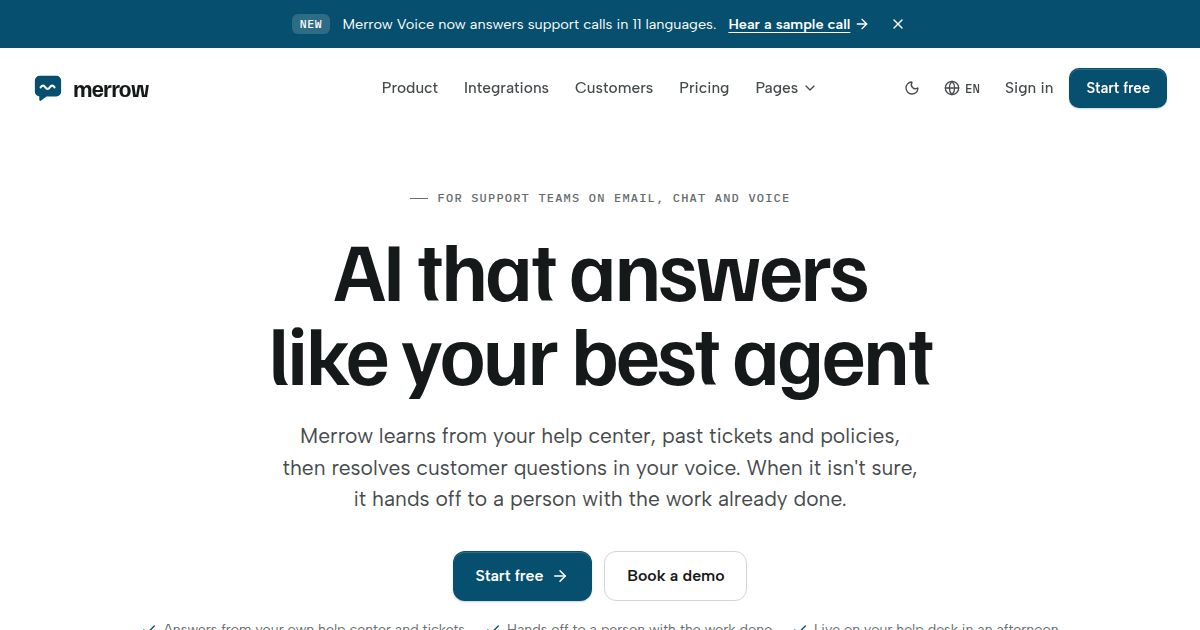
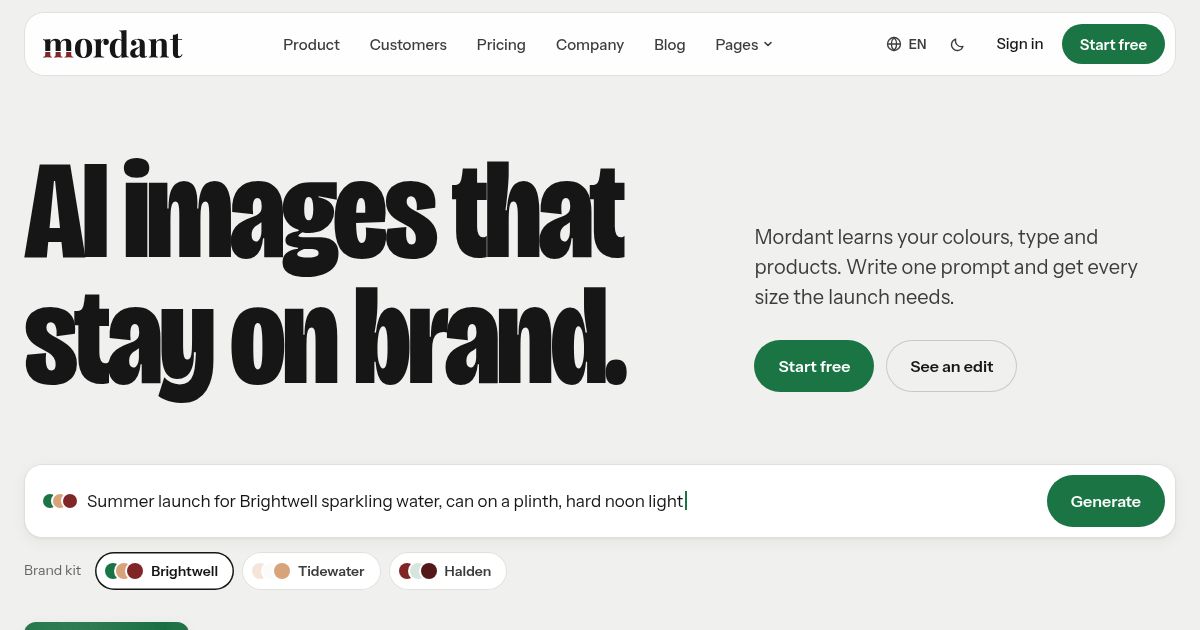
The offer was narrow: one category of care, sold online to one type of buyer. Narrow positioning makes every ad, headline and FAQ easier to write, and it makes pricing easy to read: one programme, one monthly price, with anything charged separately named up front. Our anatomy of a SaaS pricing page covers the same ideas for software.
Our guide to writing a landing page for an AI product covers how to lead with the outcome and answer objections before the sign-up.
3. Make the funnel a short, guided flow
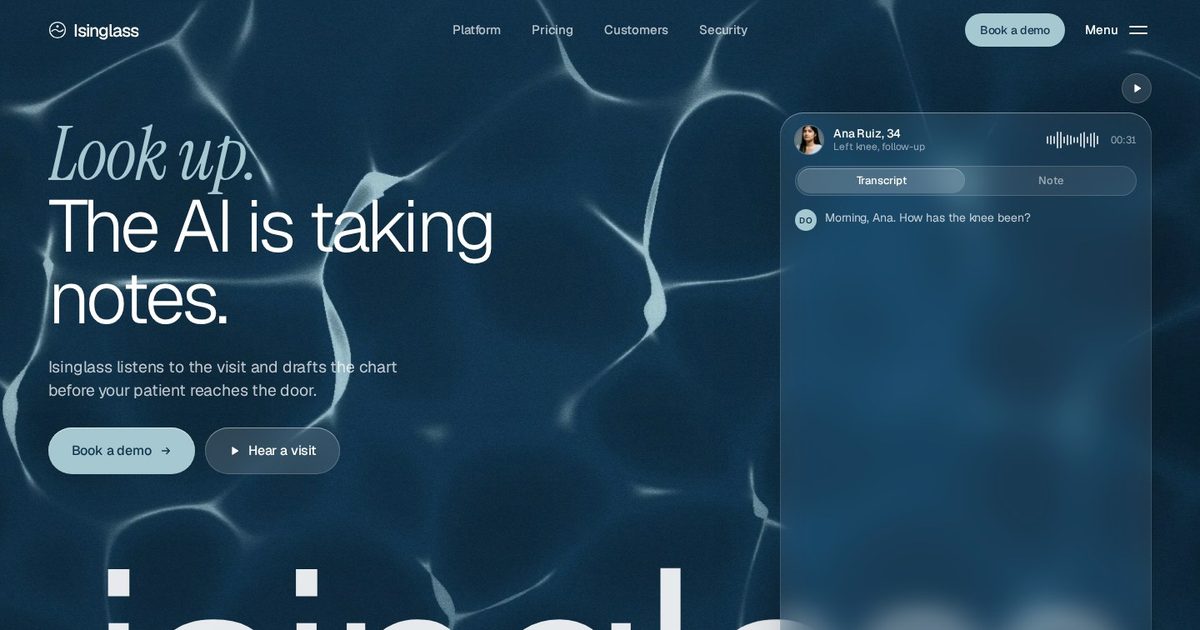
Telehealth sites tend to share a conversion structure: a clear promise, a short intake quiz, a plain explanation of who reviews it, pricing, and checkout. MEDVi's own pages describe that kind of flow (MEDVi home page). Each step should say what happens next and who decides. If you are building for clinicians rather than patients, Isinglass is our AI clinical documentation template, with pricing, security and customer pages already written. It is our own design and has no connection to MEDVi.
4. Use AI for production, keep a human on claims
AI reportedly wrote MEDVi's code, copy and ad creative. Nothing in the reporting suggests that was the problem. The trouble came from what the words and images claimed: implied FDA approval, a brand name on a drug label, and doctors who did not appear to exist. Generate as much as you like, but put every claim through one person who checks it against the rules for your category, and keep a log of what was approved.
It also helps to write the limits of the AI on the site itself, so the copy cannot drift past them. A short safety page that says what the AI may and may not do, and what only a clinician decides, does this in plain sentences.
5. Your affiliates are your brand
Much of the criticism concerned affiliate ads and affiliate email (Business Insider via AOL, Rob Freund on X). If you pay others to drive traffic, write down what they may say, monitor what they run and cut off those who break the rules. Regulators and readers will not separate you from them.
For the website side of a small-team launch, our plan for launching an AI startup website in a day covers pages, copy, deploy and pre-launch checks, and what a complete website template includes lists the trust pages (team, careers, legal, changelog) that a regulated business needs even more than most. If you want other starting points, our AI website templates collection has Isinglass alongside sites for AI products and services, and the Full Access plans include every template in every format for one payment.
FAQ
Is MEDVi really a one-person company?
Not exactly. It was reported to have two employees, Gallagher and his brother (Forbes). It also relies on partner companies for clinicians, prescriptions, pharmacy and shipping, so many more people work on the service than are on MEDVi's payroll.
Is MEDVi a billion-dollar company?
The $1.8 billion figure is reported projected sales for 2026, not a valuation. The reported 2025 figure is $401 million in sales (Journal-News). The company is private and the numbers have not been independently audited.
Which AI tools did MEDVi use?
Reports name ChatGPT, Claude and Grok for code, Midjourney and Runway for ad images and video, and ElevenLabs among the voice tools tested for customer communication (Forbes).
Did the FDA take action against MEDVi?
The FDA sent MEDVi a warning letter dated 20 February 2026 about how its website presented compounded semaglutide and tirzepatide (FDA warning letter 721455). A warning letter is not a court ruling, but it warns of seizure or injunction if violations are not corrected.
Can I copy the MEDVi model?
You can copy the structure: a focused brand, a guided funnel, a small team using AI for production, and licensed partners for regulated work. In healthcare that means working with a lawyer who knows telehealth, advertising and drug promotion rules before you run a single ad.
Changelog
- 2026-10-05: first published