3 templates · Category
Developer tools website templates
Sites for products developers adopt: platforms, APIs and code tools. They show code, not illustrations, and ship the docs, changelog and integration pages developers check before they sign up.
Developers judge a tool's site the way they judge its API: is it precise, is the example real, can I copy it. A developer tools template has to lead with code that looks like code, get out of the way quickly, and link straight into docs, the changelog and pricing. Decorative illustrations and vague benefit lines lose this audience in seconds.
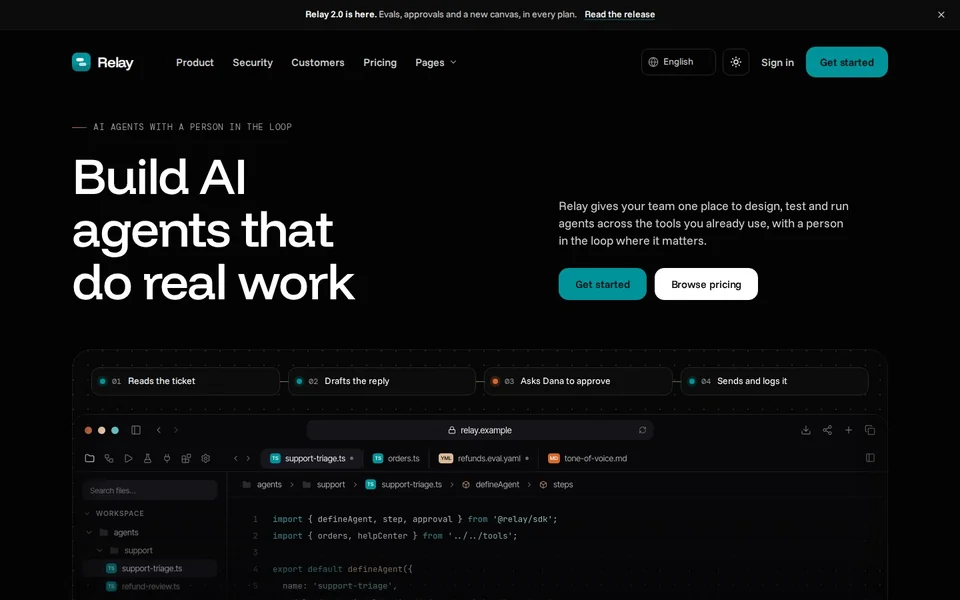
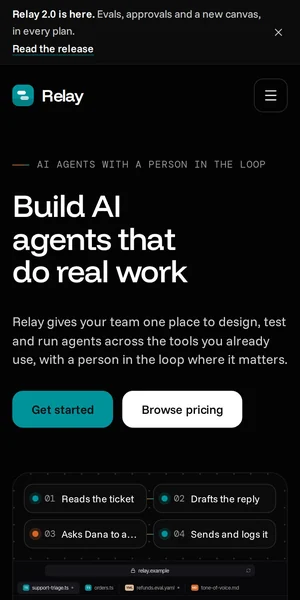
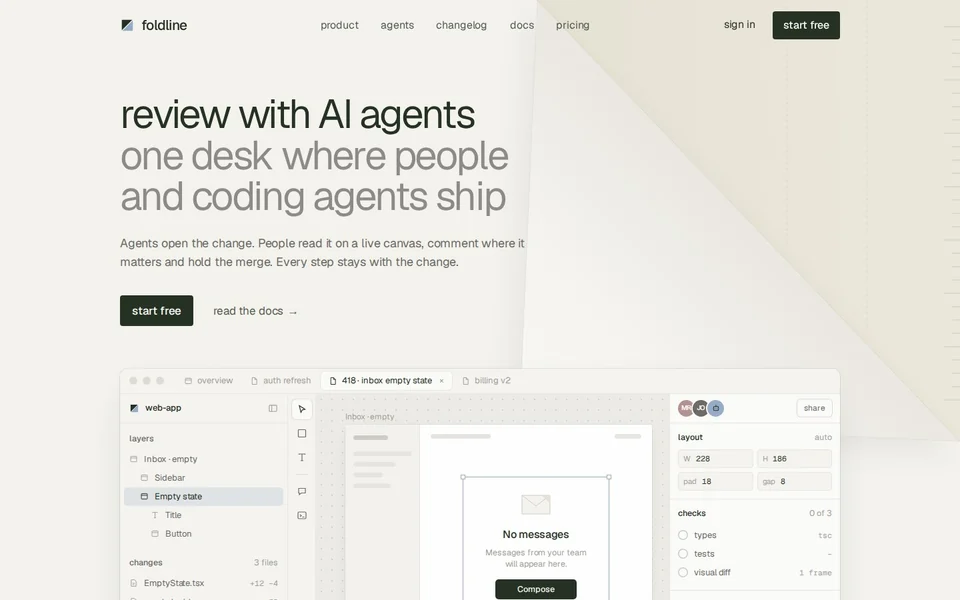
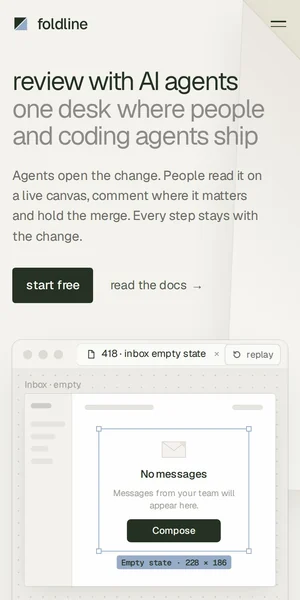
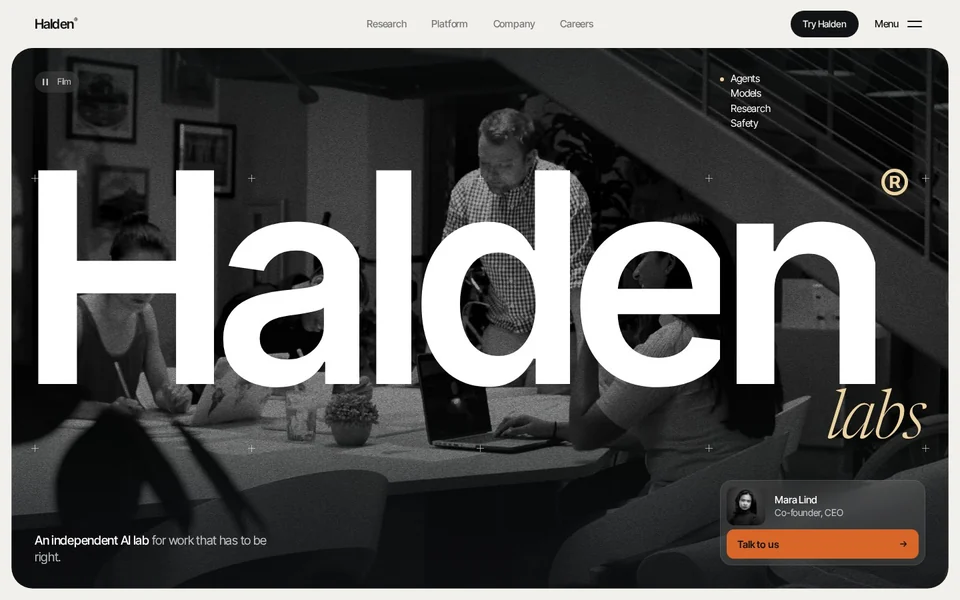
The three templates here were built for that reader. Relay leads with an install line and code samples that switch between TypeScript and Python together. Foldline shows a review canvas where a coding agent and an engineer work on the same change, and ships docs, a changelog and a roadmap. Halden has an API page with a playground that streams a reply, model cards and a research section.
Pick by what developers do first
- Relay: They install it: copyable install line, a language toggle that updates every sample on the page, an example-run player and an integrations index.
- Foldline: They read the docs and the changelog: a docs section with an article page, a changelog with entries and a roadmap with voting, plus three home pages.
- Halden: They call the API: an API page with a streaming playground, usage-based pricing with a calculator and research pages with a paper layout.
What's included
| Template | Pages | Ready today | Start-here guide | Extras ready | Price | Live preview |
|---|---|---|---|---|---|---|
| Relay AI agent platform | 31 | HTML, Prompt pack | Yes | Product UI kit | $79 | Open the Relay demo (opens in a new tab) |
| Foldline AI code review | 29 | HTML | Yes | Product UI kit | $79 | Open the Foldline demo (opens in a new tab) |
| Halden Applied AI lab | 27 | HTML | Yes | None yet | $79 | Open the Halden demo (opens in a new tab) |
Page counts are the site pages in each demo, not counting the password, 404 and coming-soon screens. Every paid template is one price for every format it ships in.
What developer audiences check
- Real, copyable code within the first screen, in the language they use.
- Docs and a changelog linked from the main navigation, not buried in the footer.
- Pricing that explains limits and overages in numbers.
- Integrations with the tools they already run.
- A dark mode, because many of them will look at your site at night in a dark editor.
All three templates are monospaced where it matters (JetBrains Mono, Geist Mono) and use code blocks that are real text, so they can be selected, copied and read by screen readers and search engines.
Docs: on the marketing site or separate?
Most developer tools end up with a separate docs product (Mintlify, Docusaurus, Starlight or similar) because docs grow faster than marketing pages. Foldline's docs pages are designed for the early stage, when ten good articles beat an empty docs platform. When you move docs out, keep the same header and footer links so the switch is invisible to readers.
Questions
Are the code samples real code?
They are real text in code blocks with copy buttons. Replace them with your own SDK calls; the language toggle in Relay switches every block that has both versions.
Can I host these next to my docs?
Yes. The HTML builds are static files you can host anywhere, including the same domain or subdomain as your docs.
Is there a dark mode?
Foldline and Halden ship designed light and dark token sets. Relay uses light and dark sections within one theme.
Do these templates suit an open-source project?
Yes, especially Relay and Foldline. Swap pricing for a sponsors or enterprise page and keep the docs and changelog structure.